 Join on WhatsApp
 Join on Telegram
Rabat – Despite last week’s UN Security Council’s resolution calling for the “immediate, safe, and unhindered” delivery of humanitarian assistance to the war-torn Gaza Strip, the situation on the ground paints a starkly different picture.
On Thursday, a mere 76 trucks crossed into Gaza from Egypt through the Rafah crossing, a significant drop from the daily average of 500 truckloads, including vital supplies and private sector goods, prior to October 7, according to the Office for the Coordination of Humanitarian Affairs (OCHA).
The drafted resolution’s call for urgent aid delivery faces insurmountable challenges, as outlined by UN emergency relief chief Martin Griffiths on a social platform.
“Think getting aid into Gaza is easy? Think again,” warned Griffiths, highlighting the formidable obstacles faced by humanitarians. He pointed to the three layers of inspections, insufficient entry points, constant bombardment, and damaged roads that hinder aid deliveries.
Griffiths emphasized the urgency of the situation, asserting: “This is an impossible situation for the people of Gaza and for those trying to help them. The fighting must stop.”
UN Secretary-General António Guterres underscored the essential elements for an effective aid operation in Gaza: security, safe working conditions, logistical capacity, and the resumption of commercial activity.
Read also: Pregnant Women in Gaza Are Starving
Unfortunately, as Guterres noted, these critical elements are currently nonexistent, exacerbating the challenges faced by aid workers on the ground.
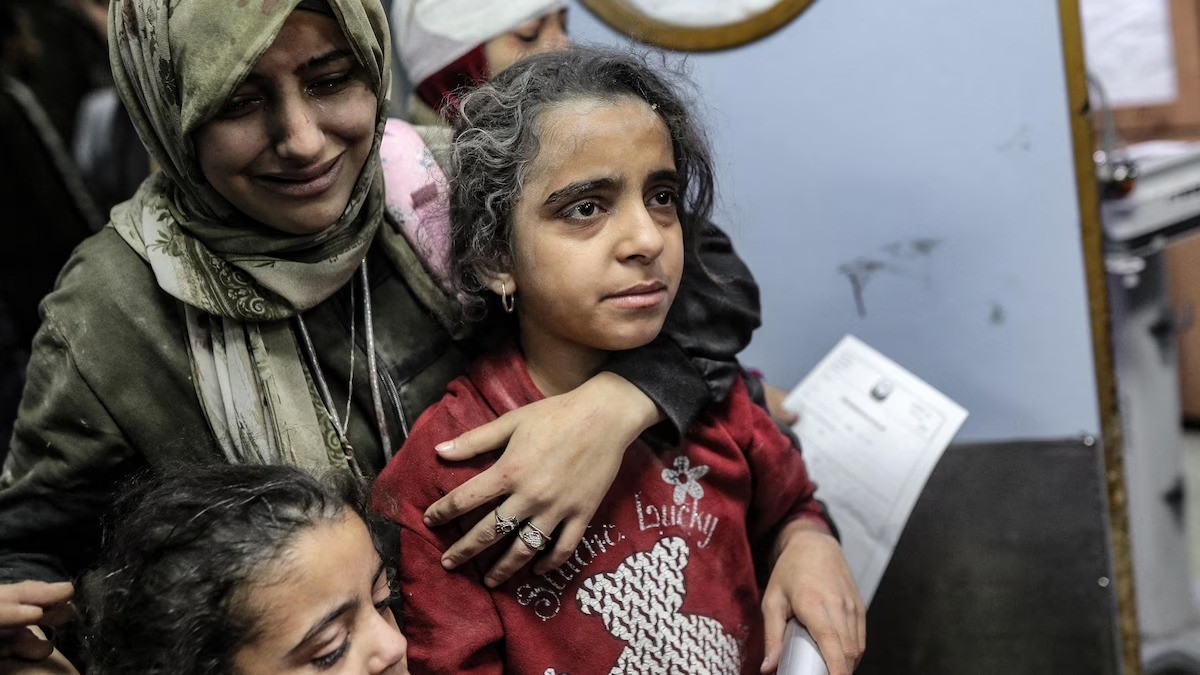
Griffiths spoke of a “traumatized and exhausted population” crammed into an increasingly confined space. With relentless Israeli bombardment and intense ground fighting persisting in the region, he appeared to note, bringing more aid to those in need is proving to be an uphill battle.
Reports from Gaza’s health authorities, cited by the UN humanitarian affairs coordination office OCHA, paint a grim picture. Half of all pregnant women seeking safety in shelters suffer from thirst, malnutrition, and a lack of healthcare.
Vaccination shortages for newborns compound the crisis, while one in every two displaced children faces dehydration, malnutrition, and disease.
The latest wave of displacement, according to OCHA, stemmed from an escalation of hostilities in the southern town of Khan Younis and central Gaza’s Deir al Balah, coupled with evacuation orders issued by the Israeli military.
Notably, Rafah, estimated to be the most densely populated area in Gaza over ten days ago, already exceeded 12,000 people per square kilometer.