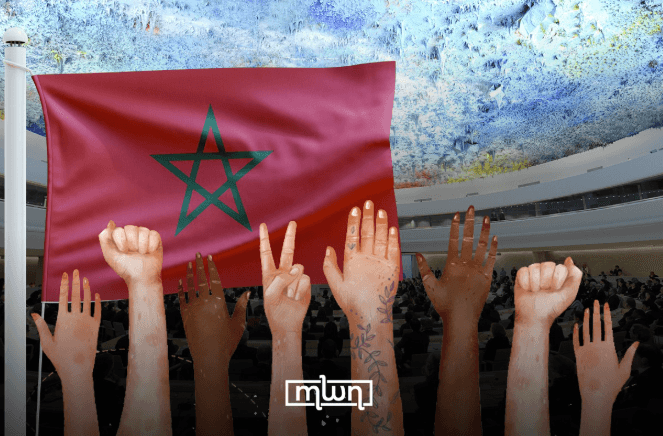
Morocco has spearheaded several initiatives at the UN Human Rights Council over the past decades, with the focus always being the need to promote human rights and guarantee civil liberties as enriched in the country’s constitution.
These efforts have increasingly earned Morocco recognition and support within the international community, with allies of the North African kingdom frequently hailing its bold reforms and its progress in a wide range of areas.
In December last year, the UN commended Morocco for its active engagement in promoting human rights, notably its commitment to advancing the global human rights agenda.
A year earlier, several countries celebrated Morocco’s efforts toward “improving and respecting” human rights across the country.
The group of countries included leading nations in the international community, such as the UAE, Bahrain, Saudi Arabia, as well as a cohort of nations from the African continent like Cote d’Ivoire, Burundi, Burkina Faso, and Guinea, among others.
These accolades come as the North African country continues to pledge commitment to cooperate with the international community as well as local organizations to strengthen the role of civil society NGOs and public bodies in facilitating the implementation of reforms seeking to improve national human rights.
A sense of responsibility
Such efforts have mainly contributed to positioning Morocco as a key player on the international stage, particularly within the Human Rights Council (HRC), of which the North African country is an active member.
“This commitment is part of a collaborative approach that promotes universal values, earning Morocco a leading role within HRC,” an authorized source told Morocco World News, noting Morocco’s election to the presidency of the council in 2023.
The source emphasized that Morocco’s efforts on the global stage over the past two decades reflect the country’s “constant activism,” “dynamism,” and its sense of responsibility as a founding member of the HRC.
Morocco secured the presidency of the UN Human Rights Council for this year after receiving overwhelming support with 30 votes out of 47, surpassing South Africa’s 17 votes.
The election marked the first time Morocco has assumed the presidency of the UN body, signaling global acknowledgment of the country’s commitment to reforms, particularly in the field of human rights.
Many human rights experts saw Morocco’s election as testament to the country’s efforts in respecting and advancing human rights despite lingering challenges.
Morocco as an enabler of dialogue and a champion of tolerance
Amina Bouayach, President of the National Human Rights Council (CNDH), pledged in January this year that Morocco will contribute to resolving international crises and its own human rights-related complex challenges through a genuine commitment to a dialogue-based approach.
In May this year, Morocco was also re-elected to the UN Human Rights Committee, with an overwhelming majority of 120 votes.
The Human Rights Committee, which consists of 18 experts elected by States Parties, is tasked with monitoring the implementation of the International Covenant on Civil and Political Rights.
Again, this election showed the international community’s recognition of Morocco’s activism in advocating for the abolition of hate speech and its efforts in promoting interfaith dialogue and coexistence.
In recent years, the North African country has consistently championed initiatives aimed at boosting religious tolerance and diversity. One of the notable expressions of the country’s commitment to interfaith dialogue and diversity was the adoption of a Morocco-presented resolution at the UN General Assembly in July last year.
The resolution condemned all acts of violence perpetrated against individuals based on their religion or beliefs and the desecration of sacred texts, stressing that such behavior violates international law.
Another example of Morocco’s commitment to the Un’s human rights agenda is its launch of the Convention Against Torture Initiative and the Initiative for the International Convention on Enforced Disappearances.
Read also: Global Leaders Gather in Morocco for UNHRC Retreat to Shape Human Rights Strategies
“This outstanding contribution by Morocco to the international human rights system is part of the continuity of the kingdom’’s efforts in human rights, demonstrated through voluntary and constructive international cooperation with all components of the human rights system,” the source said.
Morocco is also a party to 9 out of 10 major conventions related to human rights, in addition to being engaged in presenting its reports to treaty bodies.
The country notably completed its fourth cycle of the Universal Periodic Review in 2022, with all 193 member countries of the UN participating in the review process.
In a speech last year, King Mohammed VI reaffirmed his determination and strong attachment to the promotion of human rights in Morocco from all perspectives.
The monarch made his speech in a message to participants at the International Symposium held in Rabat to mark the 75th anniversary of the Universal Declaration of Human Rights.
“Morocco opted for a remarkable and unique approach to human rights. This approach, which is still evolving, has contributed to shaping the experience of the international community in this regard,” the King said on that occasion, stressing Morocco’s commitment to promoting human rights.
“Our commitment to human rights has become a defining element of public policy and a basic determinant of the strategic decisions we make, be it in the economic, social, cultural or environmental sectors,” he concluded.