Join on WhatsApp
 Join on Telegram
Marrakech – Held under the title “Building Foundations for an Inclusive Digital Future,” a panel held by the World Bank today in Marrakech gathered several figures to discuss the world’s digital transformation.
Morocco’s Minister of Digital Transition and Administration Reform Ghita Mezzour, World Bank Senior Managing Director Axel van Trotsenburg, and Ghanaian Minister of Communications and Digitalisation Ursula Owusu-Ekuful all took part in the discussion.
In addition to discussing ways to bridge the digital gap between the developed and developing world, the panel also highlighted the importance of ensuring an equitable access to technology within countries themselves.
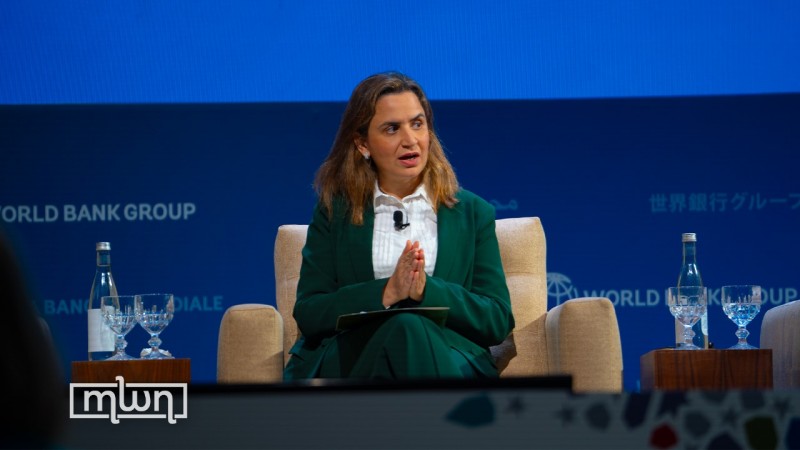
Morocco’s Minister of Digital Transition Ghita Mezzour.
A digital transformation for the people
Mezzour emphasized that Morocco is not engaging in a digital transformation just for the sake of it.
“It’s with the goal to serve society, to serve humans,” she added, stressing that many of Morocco’s projects in the field now concern the scaling of its current efforts to reach all people equally.
The minister said that King Mohammed VI talks about the digital transformation as a means to empower people.
She also drew attention to the government’s efforts to subsidize electrification and the establishment of internet infrastructure in rural and secluded areas.
“In 2018, more than 10,000 localities had either no internet coverage or poor internet coverage,” she said, adding that today 96% of those localities now have access to the internet.
This access came to the spotlight during the recent devastating September 8 earthquake that struck several rural areas and villages, where the minister said maintenance teams were able to restore 95% of connectivity within 12 hours.
This connectivity can be vitally important in times of such disasters, enabling people to communicate with loved ones and to obtain urgent help if necessary.
Equality was also on the mind of Ghanaian Minister of Communications and Digitalisation Ursula Owusu-Ekuful, who highlighted that her ministry has made efforts to specifically include women in the country’s digital transformation.
“We have several programs from primary school level to the working population to include them,” she said, pointing out that technology and digital skills have been a male-dominated sector.
“Those who had never seen a computer before are now building their own websites and simple games,” she detailed. “[They] have moved from aspiring to be in the traditional professions to be software engineers.”
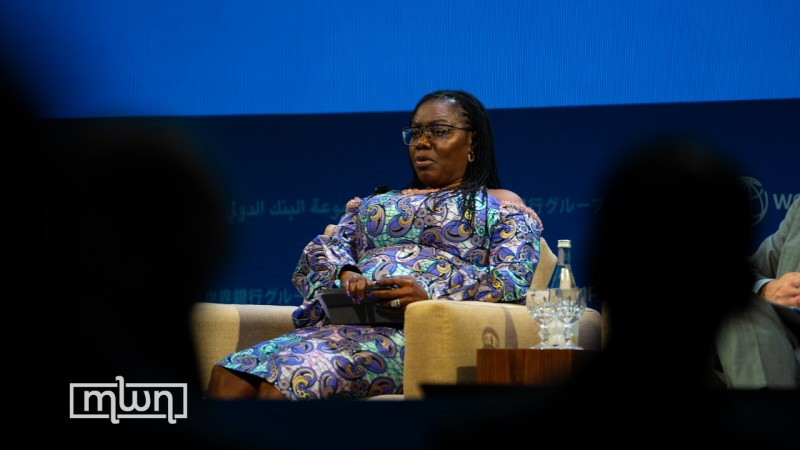
Ghanaian Minister of Communications and Digitalisation Ursula Owusu-Ekuful.
Owusu-Ekuful stressed the importance of education in the field, detailing some of her country’s educational programs for developing technical skills for youth and women.
Mezzour also spoke of Morocco’s progress when it comes to gender equality in its digital transformation, pointing out that 40% of people trained in digital skills are women, a percentage that is in line with some developed countries.
Accelerate access
For Axel van Trotsenburg, World Bank Senior Managing Director for Development Policy and Partnerships, there is also a special importance placed on accelerating this progress, and allocating essential resources for it.
“You cannot build this digital future on the basis of hope,” he said. “We need financing.”
Van Trotsenburg explained that the World Bank, in addition to conducting its own analytics and research in the field, is also in communication with African and other developing countries to determine where investments are needed.
“Time is not on our side, so we need to accelerate [the digitization process in Africa],” he added, as digital equality will prove essential for enabling the continent to stand toe to toe with developed nations.
As much as equality is important in any state’s digital transition, the World Bank official highlighted that equality is also important in a global context.
“In industrialized, advanced countries, nine out of 10 people have access to digital services,” he explained. “In low-income countries, one to four.”
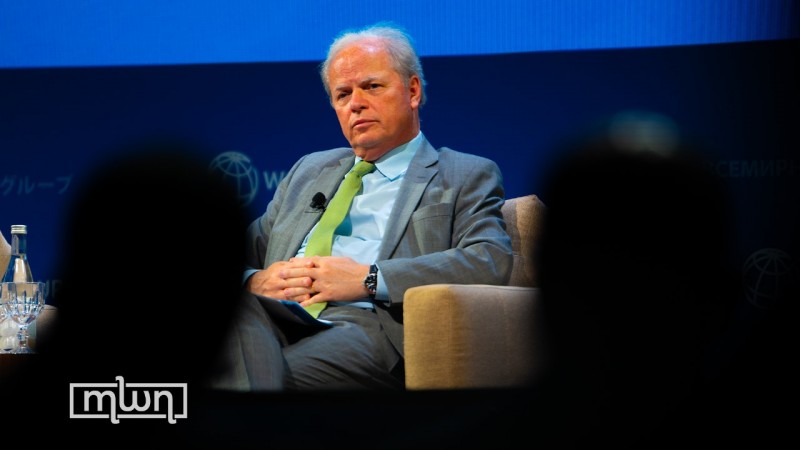
Axel van Trotsenburg, World Bank Senior Managing Director for Development Policy and Partnerships.
He also drew attention to the fact that about 2.7 billion people worldwide have no access to the internet, warning that countries could fall behind if these inequalities are not dealt with.
This can be ensured through making the correct investments and making sure that access to the internet and other digital tools remains affordable and accessible.