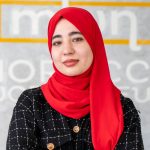

Rabat- Asmaa Boujibar, a Moroccan associate professor of planetary sciences and an assistant professor in the departments of geology, physics, and astronomy at Western Washington University (WWU), has obtained from NASA a new two-year grant totaling $300,000.
The funding is meant to support Boujibar’s research efforts focused on investigating the constituent elements of planet Mercury in her laboratory. The research aims to understand Mercury’s geological history and future evolution.
“Boujibar is able to produce in her lab the same chemistry, pressures, and temperatures that are present on Mercury,”, thus creating a small-scale representation of the planet in Bellingham, WWU News reported.
The Moroccan researcher explained the purpose and significance of her research in a statement to the website.
“The high-pressure, high-temperature laboratory enables us to simulate the interior of planets, including Earth,” she said. “So, we basically combine data from the surface with experiments to figure out what the interior might look like, and construct a full picture of what the planet is made of, all the way to the core.”
Leveraging data, maps, and information obtained by NASA’s Messenger probe, which orbited Mercury from 2011 to 2015, Boujibar and her dedicated team have been able to glean insights into the geological past, present, and future of planet Mercury.
Read also: NASA: Morocco’s Kamal Oudrhiri Leads Breakthrough in Quantum Physics
Unlike Mars, where rovers are directly collecting and transmitting data back to Earth from its surface, Boujibar’s current focus, planet Mercury, is much more reluctant to divulge its secrets.
“For Mercury, we must work with laboratory simulations and remote sensing. All the work we do in my lab can only be based on remote sensing data, and a huge majority of that comes from the spacecraft Messenger,” said Boujibar.
According to the WWU News report, this two-year NASA grant will also enable students to focus their research on the intricate patterns observed on Mercury’s surface, utilizing artificial intelligence.
Asmae Boujibar was raised in Casablanca and pursued her higher education in France, where she obtained her undergraduate degree and eventually earned a doctorate from the University of Clermont Auvergne in 2014.
“As a young girl growing up in Morocco, it just never dawned on me that I would be able to do any of this. It was just a case of someone following their interests,” she told WWU News.
King Mohammed VI decorated Boujibar in July 2015 in recognition of her excellent and inspiring work and for being the first Moroccan woman to join NASA.