
Rabat – Every diplomatic breakthrough in favor of Morocco on the Sahara issue is followed by a flurry of declarations and opinion articles by “experts,” politicians, journalists, and former diplomats who have in common a propensity to disqualify or dismiss anything that clashes with their alternative vision of “facts” or “truth” in international affairs.
So, it came as no surprise when France, which many of these self-appointed advocates of the “oppressed Saharawi people” hoped would lead their crusade against the growing pro-Morocco momentum on the Sahara question, was in turn roundly vilified and demonized earlier this month after President Macron unprecedentedly embraced the Moroccan Autonomy Plan and described it as the only viable route to lasting resolution of the territorial dispute.
Maintaining false narrative as cushion against frustrating reality
Almost immediately after Macron announced France’s historic change of policy in the Western Sahara affair, the usual suspects came out to make the argument they always invoke on such occasions: France’s newfound position is not only a disgrace and shameful betrayal of the Sahrawis, but it is above all fundamentally at odds with international law.
Self-servingly ignoring the developments that have taken place since 2007, especially the fact that the UN Security Council has practically conceded the infeasibility of a referendum and instead shifted to calling for a compromised-based or politically negotiated resolution, they continue to argue that the only possible solution to the Sahara dispute is a self-determination referendum.
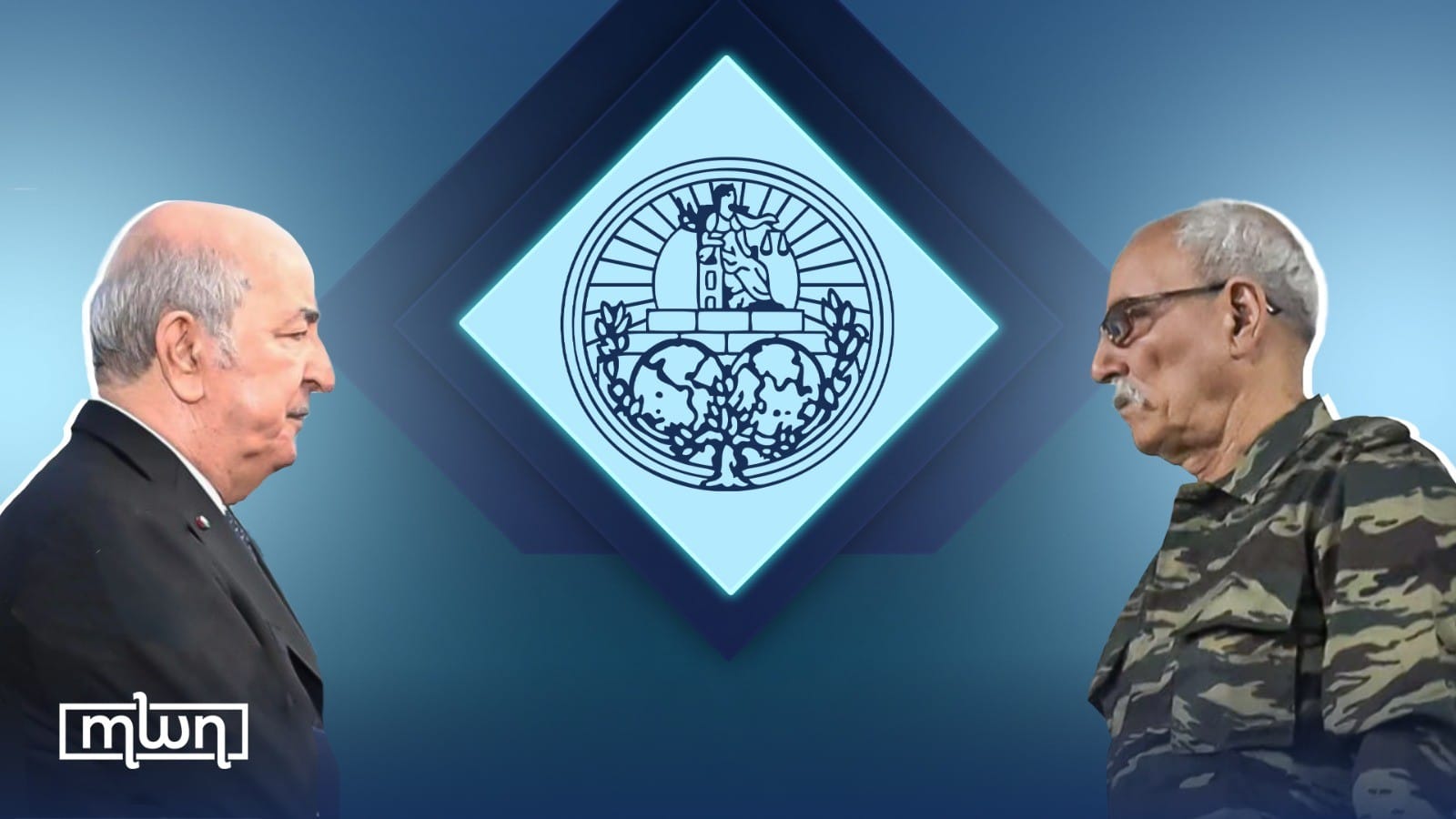
And so, to give a semblance of argumentative solidity and legal ground to their deluded vision of the dispute and how to end it, Polisario supporters always make sure to strategically deploy the advisory opinion of the International Court of Justice (ICJ).
The court’s non-binding and ultimately inconclusive opinion is in essence the magic rhetorical wand they wave to make two points: First, Morocco has no legal title over the Sahara; and second, a self-determination referendum is the best and only way towards a serious resolution of the Sahara dispute.
But the problem with this line of reasoning is that the first argument is historically unfounded, while the second – the centrality of a self-determination referendum to UN-led mediation – has been disqualified as a sound course of action by the UN Security Council.
Read also: On Western Sahara, French Media Prefers Activism to Journalism
It is intellectually dishonest and misleading to insist that the International Court of Justice issued a binding ruling on the Sahara question, when in reality it only provided an advisory opinion on the matter after being seized by Morocco to do so. As I explain in my newly published book on the dispute, in addition to the fact that the ICJ overstepped the mark set by the General Assembly, it gave an advisory opinion, leaving the GA with the discretion to decide on the path to take to reach a definitive solution to the conflict.
Indeed, the court itself acknowledged that its advisory opinion was not binding when it insisted in its ruling on leaving the UN General Assembly the “discretion” to decide on the path to take to reach a definitive solution to the Sahara conflict. It so happens that since 1990, the Western Sahara question has been the responsibility of the Security Council, which decides on the approach to be taken to enable the parties to reach a solution.
And this is exactly the problem for Algeria and the cohort of pseudo-specialists and observers who support it. They cannot accept the fact that it is the Security Council that has taken up the issue since 1990 and that, since 2002, it has completely buried the option of a self-determination referendum.
Moreover, not only do they deliberately omit the fact that the ICJ ruling did in fact acknowledge the existence of allegiance ties between the Saharan tribes and Morocco, but they also ignore the dissenting opinions of some ICJ judges who took part in the deliberations that resulted in the ruling they are ever so keen to invoke.
The first was Judge Fouad Ammoun, who argued that the political ties that existed between the Saharan tribes and the Sultans of Morocco legally amounted to a recognition of Moroccan sovereignty. “In any case,” he argued, “allegiance to the Sultan was equivalent to allegiance to the State.”
The second was Judge Forester, who expressed his categorical disagreement with the ICJ’s conclusion. He was particularly dismayed by the Eurocentric approach with which the court’s judges addressed the conflict, dismissing pre-colonial Morocco’s state structure because it did not resemble that of European countries. For Forester, the ICJ should have made an effort not to view African issues through fundamentally European lenses.
The third insider to cast doubt on the ICJ’s opinion was Judge Boni, who questioned the very legality of the court’s ruling. Even though he had voted in favor of the two questions before the court, Boni remained convinced that the judgment did not sufficiently consider the “local context.”
He stated that the court had ignored the religious ties between Moroccan sultans and the Sahrawis, under which the sultans were the Commanders of the Faithful. The court had scandalously ignored the religious ties between the Moroccan sultans and the Sahrawis, under which the sultans were the commanders of the faithful, he said. As he explained, the Moroccan sultans were considered by the local population to be their leaders in both religious and temporal matters.
Furthermore, in the months following the publication of the ICJ’s advisory opinion, many renowned international law practitioners such as Maurice Flory, Charles Vallées, BO Okere, and others lamented the political nature of this opinion. In particular, they emphasized and lamented the fact that the ICJ’s politically motivated interpretation of the Sahara dispute muddied the waters by failing to give a conclusive answer to the two questions it was considering, ultimately making the resolution of the conflict more difficult.
The game changed dramatically in 2007
Contrary to the allegations of Polisario supporters, the ICJ’s advisory opinion is no longer a reference in the UN process for resolving the Sahara dispute. Now, it is the Security Council resolutions that constitute the main reference for any discussion on how best to break the decades-long political and diplomatic deadlock.
Since 2007, all Security Council resolutions have emphasized that any solution to the conflict should be based on compromise and guided by realism. As is readily apparent to anyone who has followed developments in the Sahara dossier over the past decade, this position is an implicit recognition of the Moroccan autonomy proposal as the most viable route to a viable and sustainable solution. This is why Algeria and the Polisario have essentially resorted to boycotting the political process in order to blackmail the UN into bringing the self-determination referendum back to the negotiating table.
Much to the chagrin of those who insist that the positions of France, the United States, or Spain are contrary to international law, neither the ICJ’s advisory opinion nor the UN General Assembly resolutions adopted between 1966 and 1990 are the legal references governing the Sahara dispute. Since 1990, the Sahara question has been in the hands of the Security Council, which, as the UN body responsible for maintaining international peace and security, is tasked with laying out the appropriate approach to enable the parties to reach a mutually acceptable political solution based on compromise.
Any “professor” of international law who says otherwise is simply living in an alternative world. Over the past decade, these “professors” and “experts” have revealingly sought to conceal three essential elements. First, the fact that it is the states, through their actions and behavior, that create international law; second, it is within the framework of the United Nations that this international law is codified; and third, the resolutions adopted by the Security Council since 2007 have become the legal framework governing all actions aimed at finding a political solution to this conflict.
In recent years, repeated UN Security Council resolutions and UNSG reports have made it clear time and again that there can be no solution outside the parameters clearly defined in all these resolutions, especially those adopted since 2018. Moreover, with the American and now French recognition of Moroccan sovereignty over the Sahara, as well as Spain’s clear support for the Moroccan autonomy project, it is becoming increasingly clear through the actions and behavior of states that the only pragmatic and serious shot at a lasting solution is to embrace the option of broad local autonomy under Moroccan sovereignty.
Samir Bennis is the co-founder and publisher of Morocco World News. You can follow him on Twitter @SamirBennis.