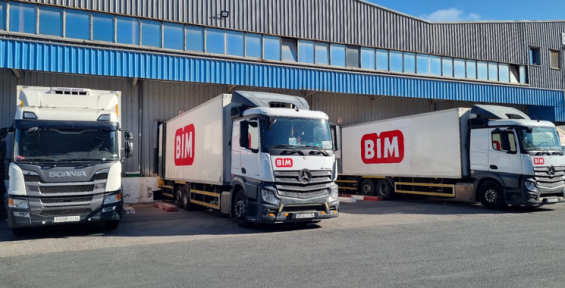
Rabat — Turkish discount retail chain BIM has launched its fourth logistics platform in Morocco, a 16,000-square-meter facility in Marrakech.
The project, whose inauguration ceremony was attended by high-ranking officials, including the Moroccan Minister of Trade and Industry and BIM Group’s CEO, highlights the company’s strategic growth in the Kingdom.
With an investment of 150 million dirhams, the new platform is designed to improve supply chain efficiency, reduce delivery times, and contribute to regional socio-economic development by creating nearly 1,000 direct and indirect jobs.
The initiative is part of a broader plan that includes expanding the logistics network and enhancing workforce capabilities, backed by a projected one billion dirham investment over the next three years.
BIM, which operates 770 stores in 60 cities across Morocco, is reinforcing its position in the retail market by prioritizing local sourcing and maintaining a competitive hard discount model.
The economic partnership between Morocco and Turkey has seen significant growth over the past two decades, with trade volumes increasing from $700 million in 2003 to $4.4 billion in 2023.
Read also: Turkey’s Exports to Morocco Increase Despite Imposed Tariffs
Turkish exports to Morocco reached $733 million in early 2024, making Morocco one of Turkey’s largest African trading partners. But this relationship remains unbalanced, with Morocco facing a persistent trade deficit.
In response to trade imbalances, Morocco revised its Free Trade Agreement with Turkey in 2020, introducing tariffs on over 1,200 imported products to protect domestic industries such as textiles, leather, and automotive manufacturing.
Yet Turkey continues to benefit from its industrial scale and diversified export base, creating challenges for Morocco in narrowing the trade gap.
Turkey’s industrial model, characterized by a robust network of small and medium enterprises focused on export-driven growth, contrasts with Morocco’s reliance on foreign investment to develop its industries.
This structural difference limits Morocco’s capacity to diversify its export offerings and achieve competitive parity.
Turkish companies have also leveraged their presence in Morocco to establish branches in key cities, intensifying competition for local businesses.
These dynamics have raised concerns about the impact on employment, particularly in sectors that traditionally provide jobs for low-income groups and young workers.