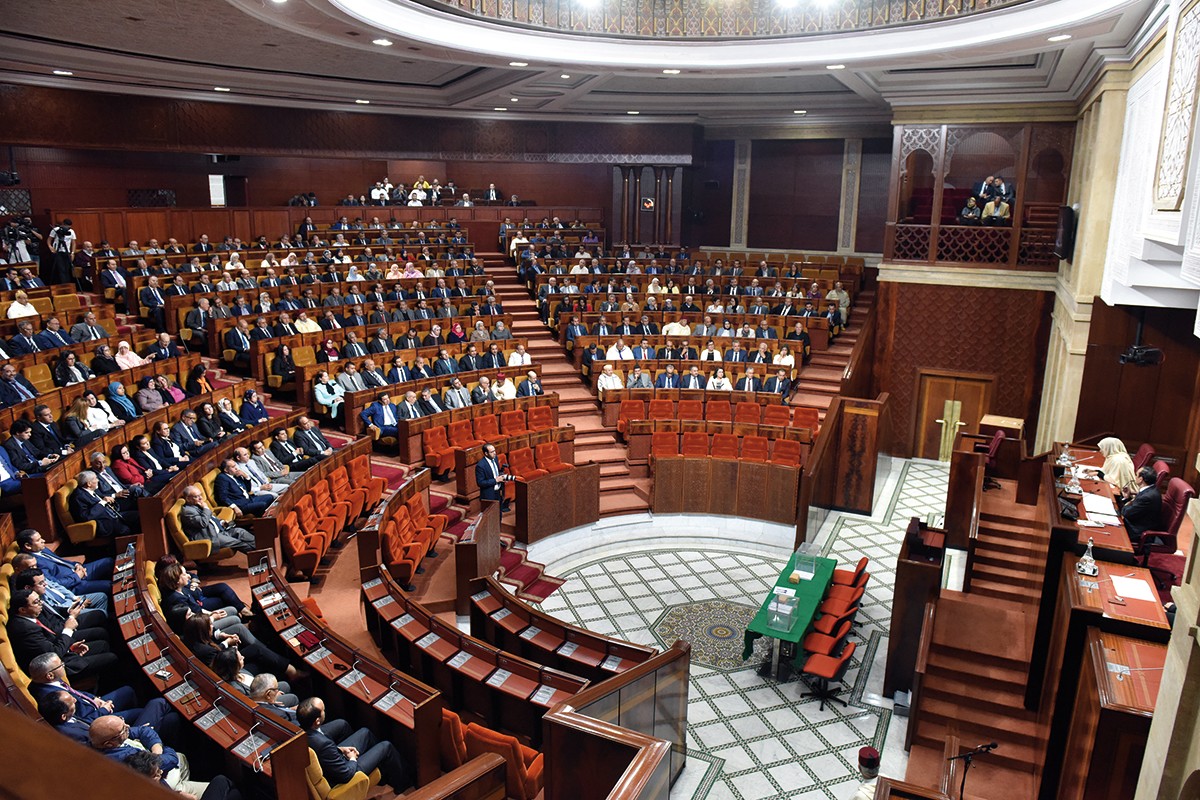
Doha – In a marathon overnight session that ended this morning, the Social Sectors Committee of Morocco’s House of Representatives approved Bill 97.15, establishing new conditions and procedures for exercising the right to strike.
The landmark legislation passed with 22 votes in favor, 7 against, and no abstentions. This followed the consideration of over 330 amendments proposed by the government, parliamentary groups and unaffiliated representatives.
Key amendments included adding a preamble outlining the bill’s general principles and references, defining its scope of application, specifying who has the right to strike, and removing a ban on strikes for political purposes.
The committee also agreed to delete articles prohibiting alternating strikes and to replace criminal penalties with fines.
The government accepted major amendments regarding the provision of minimum service in vital facilities such as health institutions, courts, transportation, and communications.
The bill’s passage marks a significant development in the regulation of labor relations in Morocco, as the country had lacked a comprehensive strike law for decades. Discussions on the legislation had been pending in parliament for nearly 20 years.
Key compromises unlock approval
Extensive debate and last-minute government amendments were key to forging the consensus needed to pass the bill. A sticking point was the inclusion of a preamble proposed by some parliamentary groups.
Minister of Employment Younes Sekkouri invoked previous Constitutional Court rulings to oppose a formal preamble, arguing it could jeopardize the law’s constitutionality.
As a compromise, the committee agreed to incorporate the preamble’s principles into the bill’s first article, without labeling it as such. The revised provision affirms the right to strike as constitutionally guaranteed and a fundamental human right, aiming to achieve social justice, social peace, and the social contract.
The new provision also expands the scope of freedoms for Moroccans. Citizens are now able to exercise this right in accordance with the constitution, relevant international charters and references, and in recognition of the historical legacy of national practice of this right.
Who has the right to strike?
The legislation significantly expands the categories of workers entitled to strike. In addition to private and public sector employees, it now covers independent professionals and non-salaried workers engaged in private activities. Domestic workers are also included, in line with Articles 65 and 99 of the Labor Code.
Under the government’s amendment, the “party calling for a strike” is defined as the entity initiating the strike, negotiating on its occasion, and seeking to resolve disputes. This party also has the power to make the call on implementing, suspending, ending or canceling the strike.
For employees, this party can be the most representative union at the national level, a nationally representative union, the most representative union at the company or institution level, or a group of company/institution employees.
For professionals, a legally compliant union or a legally established body not prohibited from engaging in union activities can call a strike. Minister Sekkouri noted this particular provision was the result of four months of negotiations.
Balancing rights and responsibilities
The law seeks to balance the rights of strikers with the freedom to work and operate nationally, regionally and locally. It prohibits any waiver of the right to strike, deeming such waivers void.
A strike is defined as any intentional, collective stoppage of work for a fixed period, in whole or in part, to defend workers’ social, economic or professional rights and interests.
For professionals and non-salaried workers, a strike is any collective stoppage of professional practice or work to defend rights or interests related to improving their professional conditions.
The legislation encapsulates the collective nature of strikes, as Minister Sekkouri explained that individual disputes could have negative consequences. He noted the new, expanded definition of strikers addresses about 80% of strike-related issues by not excluding any groups or causes for striking.
As Morocco has witnessed a rise in strikes by medical and pharmacy students, labor unions and others in recent years, this new law reflects a promising government response to expand freedoms for these groups to protest.
Read also: CNDH Advocates for Robust Protections for Striking Workers in Morocco