
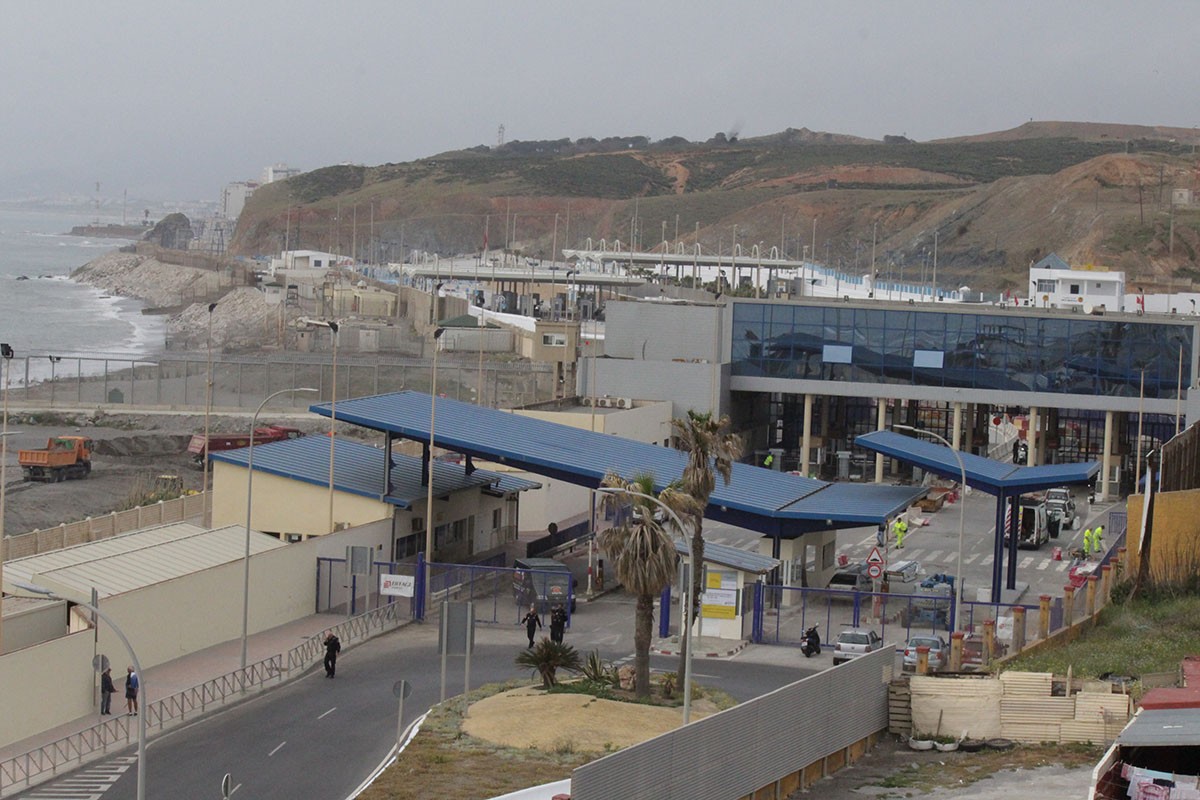
Doha – The implementation of the “smart border” system at El Tarajal crossing between Ceuta and Morocco has been postponed to the first quarter of 2025, despite completed infrastructure work on the Spanish side, officials announced.
According to Spain’s EFE news agency, the Government Delegation in Ceuta confirmed that the delay is not due to construction setbacks, as works were completed on schedule, but rather stems from broader European Union (EU) considerations.
The Entry/Exit System (EES), a cornerstone of the smart border initiative, was originally scheduled to become operational across the EU on November 10.
However, the European Commission (EC) has decided to postpone the launch after several member states reported they would not be ready by the target date.
France, Germany, and the Netherlands, which handle approximately 40% of EU traveler traffic, have reported technical delays in preparing their systems, prompting the EC to reconsider its initial timeline.
This has led to discussions about a potential gradual implementation of the EES, starting with border points that have completed their preparations.
The new system aims to modernize the control of non-EU travelers by recording information such as names, biometric data, and entry-exit details. It will replace the current passport stamping system with advanced technology for automated traveler registration.
At El Tarajal, construction work, which had slowed during the summer months due to the Operation Crossing the Strait (OPE), was accelerated after the operation concluded.
The upgrades included the installation of advanced facial recognition systems and biometric scanners to modernize one of the busiest border crossings between Europe and North Africa.
Spain has invested €7.5 million in the smart border system at El Tarajal, as part of a larger €22 million investment in modernizing the border post.
The improvements include new terminals for pedestrian and vehicle entry and exit, enhanced surveillance systems, and upgraded power generation and telecommunications infrastructure.
The EES is expected to affect approximately 700 million people annually and will enable real-time information sharing between EU member states.
The system aims to enhance border security, combat identity fraud, and improve migration flow management while reducing waiting times and providing more efficient controls for cross-border workers who travel daily between Ceuta and Morocco.
The EC is currently analyzing possibilities to make the legal framework more flexible, as current regulations do not contemplate a progressive implementation of the system.
A technical meeting is scheduled to take place in Brussels to assess the situation and determine the next steps.
Read also: Spain Allocates €4.1 Million for Video Surveillance Systems to Morocco