Doha – FIFA is preparing for a historic virtual congress this Wednesday that will officially designate host nations for both the 2030 and 2034 World Cup tournaments.
The decision, while formally requiring a vote from FIFA’s congress, comes with virtually no suspense as both bids stand unopposed for their respective editions after a complex geopolitical process that has shaped the future of football’s premier event.
The 2030 World Cup, celebrating the centenary of the tournament’s inaugural edition in Uruguay, represents an unprecedented transcontinental arrangement.
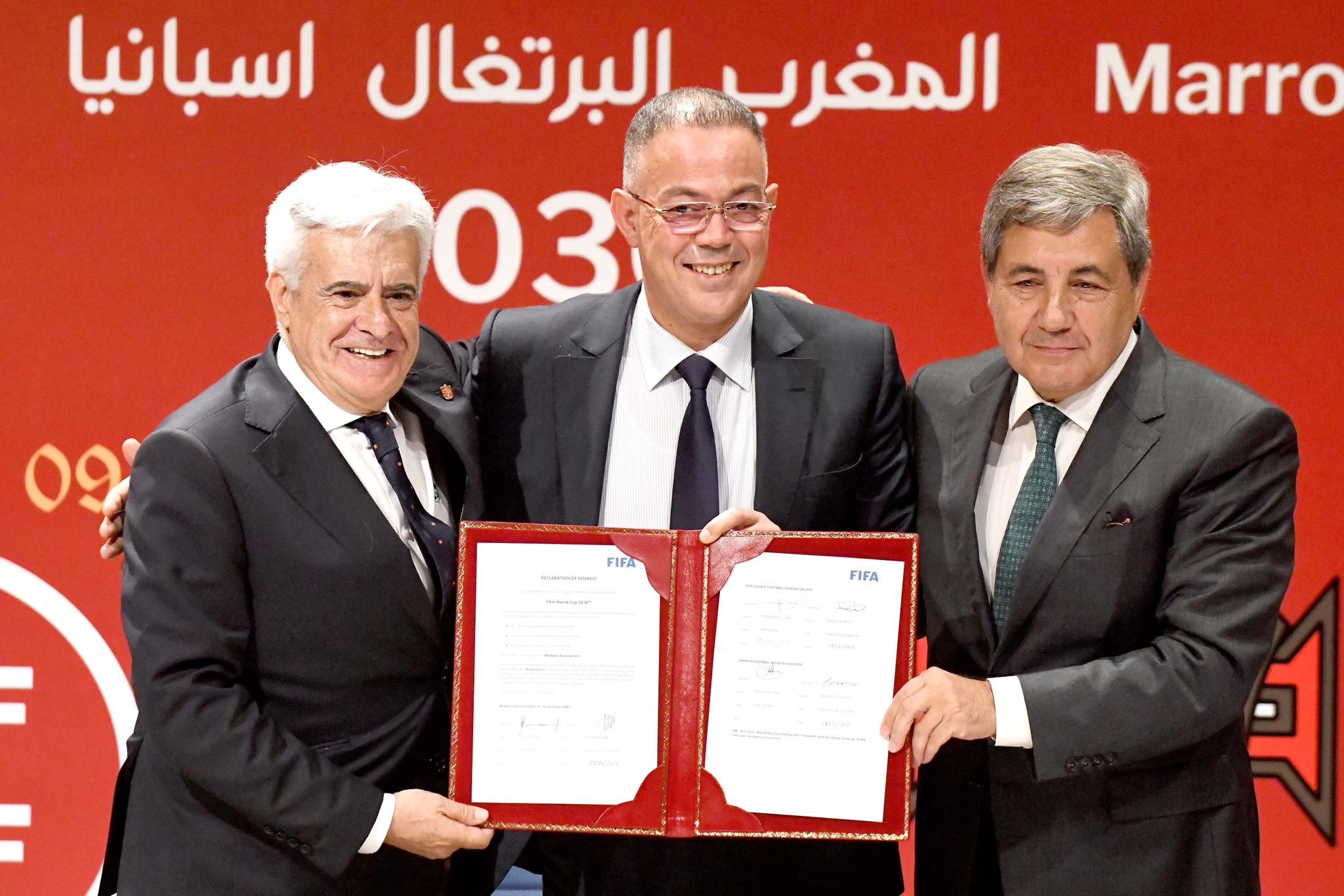
The competition will begin with symbolic “Centenary Celebrations” matches on June 8-9, 2030, featuring three openers in South America – Uruguay, Paraguay, and Argentina – before moving to the main hosts Spain, Morocco, and Portugal for the remaining 101 matches from June 13 to the final on July 21.
This unique hosting structure emerged after several dramatic shifts in the bidding landscape. Initially, the British Isles showed interest before pivoting to Euro 2028, while South Korea contemplated a joint bid with China, Japan, and North Korea.
UEFA had previously promoted a Spain-Portugal-Ukraine partnership as a “message of solidarity and hope” following the Russian invasion, but Ukraine was quietly removed when Morocco joined the Iberian bid.
The 2034 tournament has been effectively secured by Saudi Arabia, following the withdrawal of potential competitors Australia and Indonesia, and China’s suspended football ambitions.
The Gulf kingdom is embarking on an ambitious infrastructure development program, with plans to construct twelve new state-of-the-art stadiums to complement its existing two 40,000-capacity venues, as part of its preparations to host the expanded 48-team format.
Both tournaments have drawn significant attention from human rights organizations, with Amnesty International and Sports and Rights Alliance (SRA) calling on FIFA to implement comprehensive protective measures for players, fans, and local residents. These concerns span issues from worker exploitation to potential discrimination against supporters.
Morocco’s historic achievement
After five unsuccessful attempts spanning three decades, Morocco has finally secured its place as a World Cup host nation. The journey began with the country’s first bid for the 1994 edition, followed by subsequent attempts in 1998, 2006, 2010, and 2026.
This persistence has transformed into a historic breakthrough, making Morocco only the second African nation to host the tournament after South Africa in 2010.
The significance of this achievement extends beyond sports, representing a culmination of Morocco’s long-term strategic vision. The country’s football federation has demonstrated remarkable progress, highlighted by the national team’s unprecedented success at the 2022 World Cup in Qatar, where they became the first African and Arab nation to reach the semi-finals.
Morocco’s selection as co-host reflects its growing influence in both African and global football. The country has established 44 partnership agreements with African football federations in recent years, showcasing its commitment to continental football development.
This diplomatic approach through sports has coincided with Morocco’s broader African engagement strategy since rejoining the African Union in 2017.
The timing of this World Cup hosting opportunity aligns with Morocco’s broader diplomatic momentum, particularly its strengthened relationship with Spain, which recognized Morocco’s sovereignty over the Western Sahara in April 2022.
The country’s football infrastructure, while already substantial, is set for significant enhancement. Currently supporting 90,000 licensed players, Morocco’s football ecosystem is poised for expansion through initiatives like the recently launched partnership with OCP to finance professional player development centers.
Infrastructure and economic vision
Morocco’s World Cup preparations encompass a comprehensive development strategy, as outlined by Fouzi Lekjaa, president of the World Cup 2030 Committee. The plan targets multiple sectors of the economy, aiming to create employment opportunities and boost tourism through major infrastructure projects.
The cornerstone of Morocco’s World Cup infrastructure is the ambitious Hassan II Stadium project near Casablanca, with an estimated budget of €480 million. This facility aims to become the world’s largest football stadium with a 115,000-seat capacity, positioning Morocco as a serious contender to host the tournament’s final match.
The development plan extends to six host cities – Rabat, Casablanca, Fez, Tangier, Marrakech, and Agadir – each requiring significant infrastructure upgrades. Casablanca, in particular, has impressed FIFA officials, earning a remarkable 4.7 out of 5 rating, supported by its extensive 80-kilometer tramway network and comprehensive railway system.
Morocco’s current economic indicators, showing a 2.8% growth rate and 13.6% unemployment as of the third quarter of 2024, are expected to improve through World Cup-related developments. The comprehensive infrastructure program includes airport expansions in all host cities, road network enhancements, and substantial hotel and commercial development.
These developments are designed to create lasting economic benefits beyond the tournament itself, with Lekjaa emphasizing the World Cup’s role as “a unique opportunity to accelerate the dynamics of economic growth” and enhance the country’s global attractiveness.
The final venue contest
A compelling rivalry has emerged between Morocco and Spain for the prestigious right to host the tournament’s final match. Morocco’s bid centers on the planned Hassan II Stadium, while Spain offers two iconic venues: Madrid’s Santiago Bernabeu and Barcelona’s Camp Nou.
Casablanca’s bid for the final has gained significant traction, with the city’s infrastructure and transportation networks receiving exceptional ratings from FIFA evaluators. The proposed Hassan II Stadium’s 115,000 capacity would make it the world’s largest football venue, surpassing existing European facilities.
The decision on the final venue carries significant symbolic weight, potentially marking the first time a World Cup final would be hosted on African soil. This would align with FIFA’s stated goals of expanding football’s global reach and developing the sport across continents.
Spain’s bid leverages its rich football heritage and proven track record, having previously hosted the 1982 World Cup. The country will contribute 11 of the tournament’s 20 stadiums, demonstrating its substantial role in the overall hosting arrangement.
Human rights and environmental concerns
The 2030 World Cup is currently facing scrutiny from human rights organizations, with Amnesty International and SRA calling for robust protections for players, fans, and local communities. These concerns encompass potential discriminatory violations, police conduct, and housing rights for residents near tournament venues.
Brazilian footballer Vinicius Junior has raised specific concerns about racism in Spanish football, suggesting the tournament should be relocated if Spain fails to address these issues effectively.
The tournament’s unprecedented three-continent format has drawn criticism from environmental advocates. Benja Faecks of Carbon Market Watch has described it as “a geographically unfortunate choice,” citing concerns about the carbon footprint of transcontinental travel for teams and supporters.
Environmental experts, including David Gogishvili from the University of Lausanne, have questioned the ecological impact of the tournament’s structure. The expansion to 48 teams, combined with the multi-continental format, presents significant environmental challenges.
To address these concerns, suggestions have emerged for implementing “regional quotas” for match tickets, prioritizing local attendance and promoting rail travel where possible. Some experts advocate for increased use of fan zones in major cities to reduce travel-related environmental impact.
Read also: Morocco, Spain, and Portugal Cleared for World Cup 2030, Defying Human Rights Concerns