Rabat – Morocco’s National Office for Electricity and Drinking Water (ONEE) has secured a €50 million loan from the German development bank KfW to strengthen its water supply infrastructure.
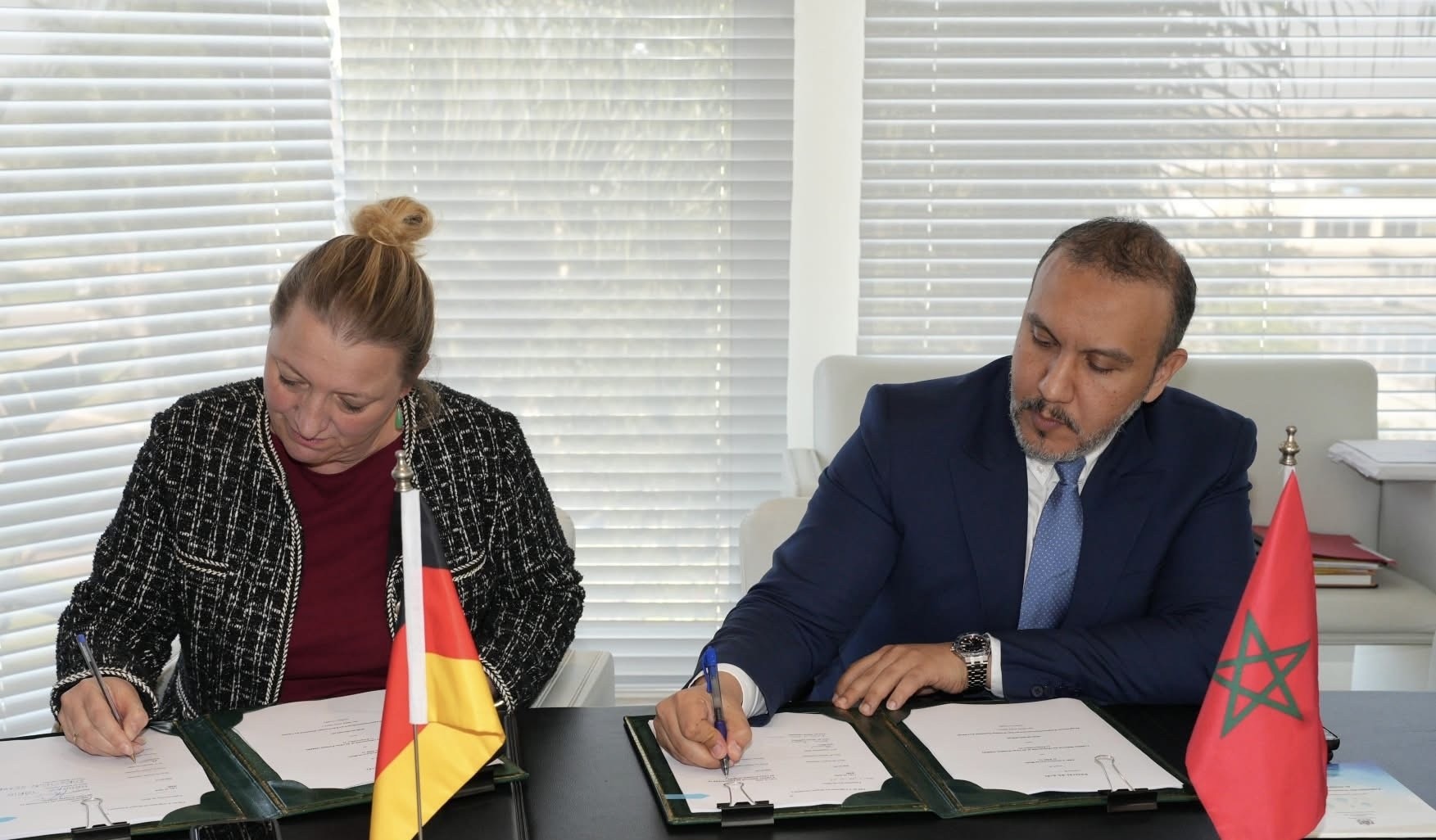
The agreement, signed on Wednesday by ONEE Director General Tarik Hamane and KfW Morocco Director Janne Rajpar, underlines the crucial role of international collaboration in addressing climate-related challenges.
The funding will support a climate-resilient drinking water program to ensure water security in several regions, including Ghafsai, El Hajeb, Ain Legdah, Bouderbala, Souk Lgour, and M’Haya.
Beyond addressing immediate water needs, the program focuses on modernizing and optimizing water supply systems to withstand future environmental pressures.
This initiative builds on a decades-long partnership between Morocco and Germany in the water sector, which dates back to the early 1980s and has since embraced innovative solutions like integrating climate resilience into water management.
Read Also: ONEE Secures €104.7 Million AfDB Grant to Bolster Water Systems, Digitalization
Beyond water, the collaboration extends to other sustainability efforts, including a €200 million (MAD 2.1 billion) financing agreement secured in June by Moroccan phosphate giant OCP from KfW.
This funding is part of OCP’s $13 billion (MAD 129 billion) green investment strategy for 2023-2027, which looks to boost sustainable fertilizer production, support global food security, and address climate change.
The partnership with KfW mirrors a shared sense of commitment to building sturdy infrastructure that would benefit current and future communities.
As Morocco grapples with water scarcity intensified by climate change, the need for sustainable, forward-looking projects to secure essential resources remains critical.
While the country saw a significant rise in rainfall this year—averaging 50 mm between September 1 and December 6, compared to just 27.3 mm during the same period last year—Minister of Equipment and Water Nizar Baraka noted earlier this month that this surplus, though helpful, falls short of resolving Morocco’s persistent water deficit.
To address these challenges, Morocco has made strides in seawater desalination, operating 16 stations with five more under construction and additional projects in the pipeline.
Baraka noted the progress in desalinated water production, which has nearly doubled from 145 million m³ to 270 million m³ since his tenure began, with an ambitious target of reaching 1.7 billion m³ by 2030.