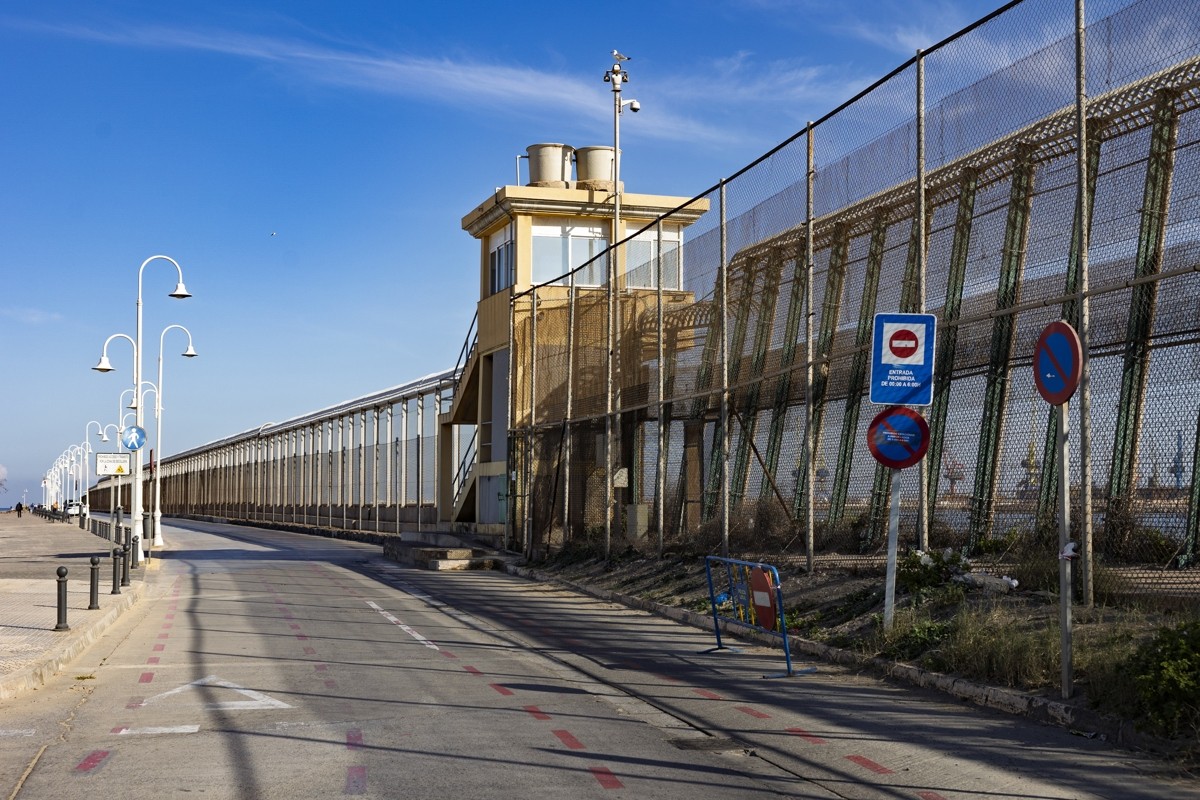
Doha – Spanish media outlets have been extensively covering the developments surrounding the reopening of commercial customs between Melilla and Morocco, with particular focus on the conditions and restrictions imposed on the cross-border trade.
The coverage reflects growing tensions between local authorities and the central government regarding the terms of the reopening.
The first commercial vehicle crossed from Melilla into Morocco this morning, marking the first such transfer since Morocco unilaterally closed the border in August 2018.
According to business sources, the inaugural export consisted of a van carrying household items and small appliances. The vehicle was sealed at the Beni-Enzar border before being transported to the Moroccan port for scanning.
Juan José Imbroda, President of Melilla, has been particularly vocal about the situation. In an interview with the TV program Espejo Público, he said, “Morocco imposes one truck per day and imposes the goods that can pass from Morocco to Melilla, and from Melilla to Morocco. There is no freedom there.”
Imbroda further questioned, “If Spain allows itself to be defeated by any contingency, who protects us?”
The local government spokesperson, Fadela Mohatar, stated firmly that Melilla “will not give its approval to the reopening of commercial customs with Morocco if it is not done on equal terms.”
”The interests of Melilla’s citizens are being threatened and undermined,” she stated.
Enrique Alcoba, president of the Melilla Business Confederation (CEME), also expressed strong opposition to the current arrangements.
“A commercial customs arrangement is nothing more and nothing less than a commercial transaction between two countries, cities, and businesspeople freely depending on the demand that exists in each country,” Alcoba explained.
He criticized the attempt to “impose a type of schedule, truck, and product,” suggesting that “then we are talking about something else.”
The opposition People’s Party (PP) has also taken a critical stance on the reopening. Party spokesman Borja Sémper questioned the terms of the agreement, asking why “all of Morocco’s demands are taken into account while Spanish demands are not.”
He expressed concern about what he described as an “imbalance” in the trading arrangements, where “Moroccan products will be able to enter Spain indiscriminately” while Spanish products face “a very small filter.”
Despite criticism, the Spanish government’s delegate in Melilla, Sabrina Moh, has defended the arrangements, stating that “Morocco does not impose rules and Spain does not comply.”
She explained that “the commercial customs now is not like the one we had before in 2018; we are talking about a 21st-century commercial customs between two countries, a European country and a third country.”
According to media reports, the current agreement restricts commercial traffic to one truck per day in both directions, operating only on working days between 10:00 a.m. and 4:00 p.m. local time. The arrangement excludes articulated trucks, trailers, and vans.
Morocco has reportedly approved the entry of hygiene and cleaning products, as well as electrical appliances and electronics, despite the fact that these items are not being manufactured in the autonomous cities.
The reopening comes as part of agreements reached during the meeting between Spanish Prime Minister Pedro Sánchez and King Mohammed VI in April 2022, which aimed to normalize relations between the two countries.
The commercial customs in Melilla had been unilaterally closed by Morocco in August 2018, causing significant economic impact on the autonomous city, which has historically depended on cross-border trade for its economy.
Read also: Spanish Analyst: Morocco, Spain May Share Sovereignty over Ceuta and Melilla by 2030