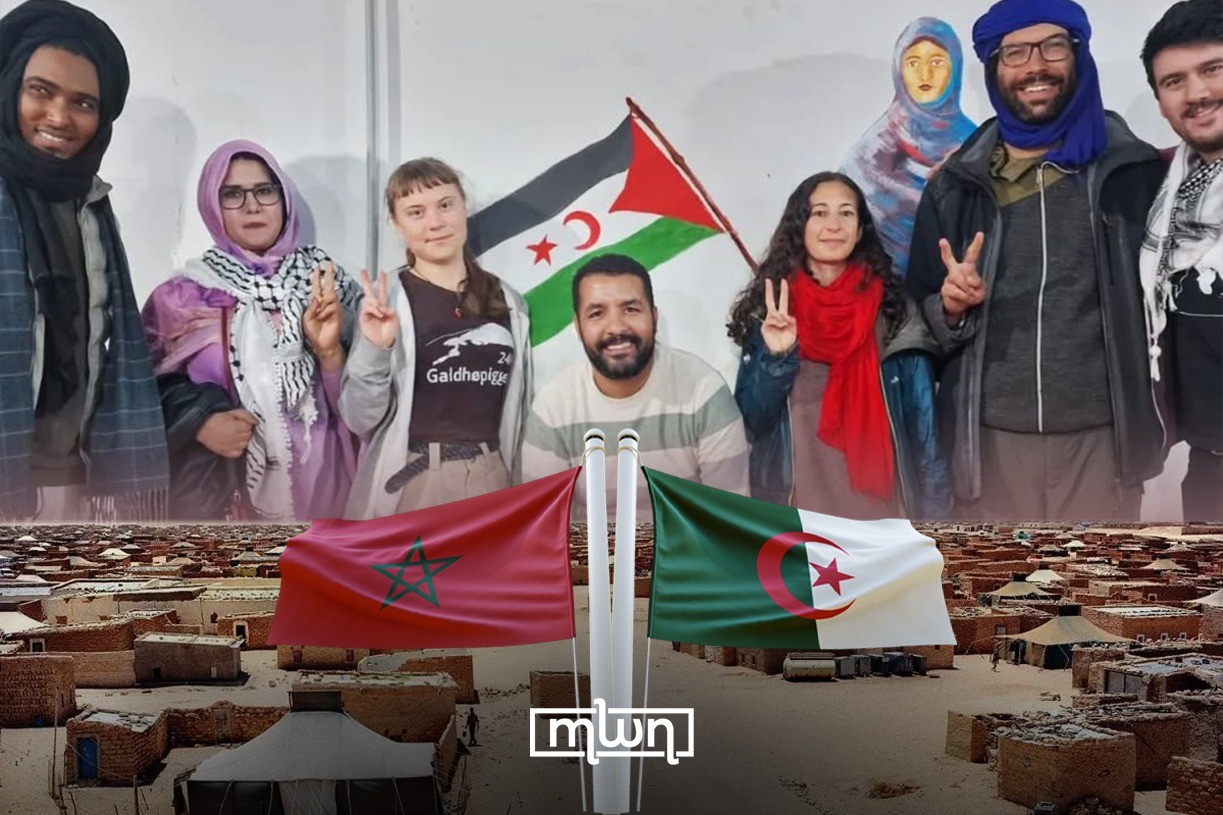
Rabat – Swedish environmental activist Greta Thunberg has made controversial comments on Morocco’s Western Sahara.
Following her visit to the Tindouf Camps in Algeria, Thunberg took to social media to express solidarity with the misleading, Algerian-backed narrative of “Western Sahara occupation” by Morocco.
Visibly clueless about the complex history of the ongoing Sahara dispute and the most recent, UN-led consensus over the legitimacy of Morocco’s claim to the region, the activist claimed that the southern provinces have been a colony since Morocco “invaded” in 1975. This Moroccan invasion forced “thousands of Saharawis to flee to Algeria where they have been living in refugee camps ever since.”
As has historically been the case with other self-righteous activists who have regurgitated the Algerian narrative on the Sahara dossier, Greta’s solidarity tour began with a solemn visit to mainland Algeria.
From there, she embarked on what she appears to describe as a humanitarian, fact-finding trip to Tindouf, the Polisario-run camps on Algerian soil.
And where countless UN reports and independent assessments by EU bodies and humanitarian NGOs have accused the Polisario leadership and Algeria for the distressing conditions in the camps, the 22-year-activist pointed the finger to Morocco instead.
Read also: Samir Bennis’s Book: How, Why the US Embraced Morocco’s Autonomy Plan
In her subsequent remarks on social media, full of self-righteous passion but light on historical details and distanced from facts on the ground, she baselessly blamed Morocco for the “severe humanitarian conditions” in the Polisario-administered camps.
If distressed Sahrawis in Tindouf are experiencing “extreme lack of water and food in 60 degree summers,” she disingenuously suggested, it’s all because of Morocco.
In so doing, Thunberg forgot to mention that the Algerian regime’s reluctance to have the UN conduct a thorough census in the camps plays a considerable role in the chronic lack of necessary humanitarian aid for those in need.
Not allowing the UNHCR to fulfill its core function of conducting a census deprives refugees from benefiting from the Biometric Identity Management System required for allowing access to humanitarian aid to help refugees.
Thunberg should have known about Fadel Breika, a former detainee in Polisario jails, who denounced human trafficking in the Tindouf refugee camps before the UN’s Human Rights Council (UNHCR).
Most problematically, perhaps, the activist seems to have no clue about the UN Security Council’s latest Resolution on the Sahara dispute.
In that resolution, as in many others that preceded it, the UN urged Algeria and the Polisario Front to allow a census in the Tindouf camps amid deepening social crises facing the refugees in the region.
The resolution cited acute food shortages and diseases triggered by lack of food, such as anemia.
But for Greta and other activists, who are usually quick to make sweeping pronouncements on issues without having the necessary grasp of the full picture, Morocco is the sole culprit in the Sahrawi tragedy.
Read also: Western Sahara: US Reaffirms Support for Morocco’s Territorial Integrity
Unsurprisingly, the activist’s controversial comments shocked many Moroccans, especially those who have long applauded and supported her climate activism.
“Listening to experts” and doing her own research have long been the hallmarks of Greta’s commendable ecological activism.
On the Sahara dossier, however, she seems to have not done even a quarter of her homework in terms of reading about the history, the ongoing UN-led political process, and current facts on the ground.
Lamenting this lack of due diligence on the activist’s part, Moroccans took to social media to express disappointment with her “childish” and whimsical pronouncements on the Sahara dispute.
“I’m surprised that as an activist, you seem to have chosen a side without delving into the complex history of the Sahara,” one commenter wrote. “True activism requires understanding the full context.”
Others blasted Thnberg for condoning misinformation, blaming her for falling prey to the Algerian regime’s propaganda.
“It’s essential to hear both sides of this issue and understand the historical, legal, and social dimensions before forming a definitive opinion,” said another commenter, adding that “the truth is often more nuanced than it may initially seem.”
Thunberg’s move seems to be another act in Algeria’s long-standing strategy of undermining Morocco’s claim to its southern provinces by misleadingly presenting it as an invader and brutal occupying power in its southern region.
By contrast, however, UN reports and resolutions over the past two decades have dismissed the Sahrawi independence narrative and instead embraced Morocco’s Autonomy Plan as the best route to lasting stability and prosperity in the region.