


 Join on WhatsApp
  Join on Telegram
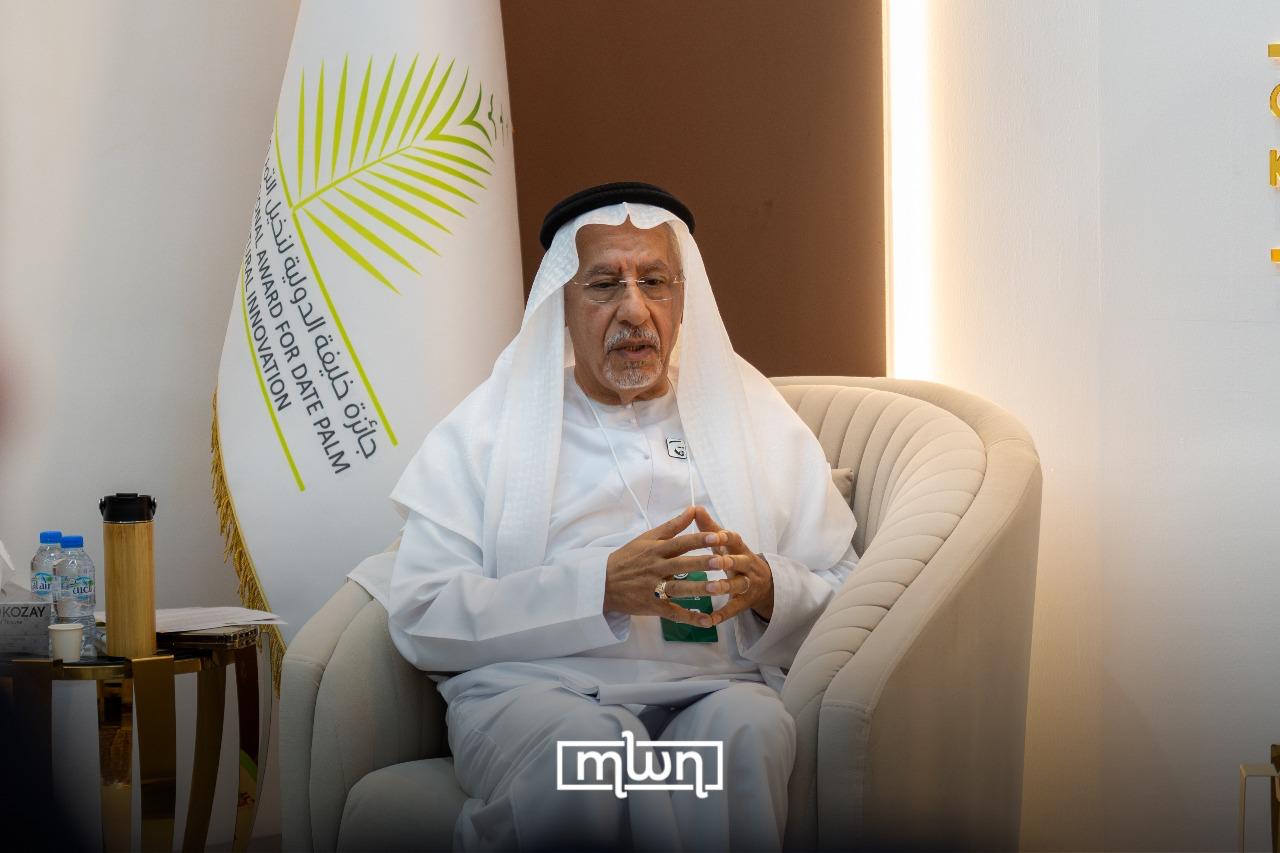
 Abu Dhabi – During Abu Dhabi’s Global Food Week (October 21-23), Abdelouahhab Zaid, Secretary General of the Khalifa International Award for Date Palm and Agricultural Innovation, narrated in detail to Morocco World News (MWN) how the prized Mejhoul date’s origins were obscured as it gained international acclaim.
“When you go to purchase some date fruits during Holy Ramadan, you usually find Mejhoul (Medjool) from Jordan, Mejhoul from Israel, Mejhoul from the US,” Zaid explained during the interview. “But when you ask for the Moroccan Mejhoul, it’s not available, it’s not there, giving the impression that people start forgetting about the real origin of such a variety.”
This disconnect between the variety’s fame and its forgotten Moroccan roots troubled Zaid deeply. Despite being one of the world’s most prestigious date varieties, Mejhoul is rarely associated with its homeland in Morocco’s southeastern region.
The variety originates from the Tafilalet oases, specifically in the Boudnib area near Errachidia, where date palm cultivation has been a cornerstone of local agriculture for centuries. The Tafilalet is the largest oasis in Morocco and a renowned center for date cultivation, housing one-third of the country’s registered date palm varieties – 151 of the 453 varieties.
Mejhoul dates were recognized for their exceptional quality as early as the 17th century, commanding premium prices in the markets of England and Spain. Most dates imported to Europe during this period came from Tafilalet, establishing an early international reputation for Moroccan dates.
However, this flourishing trade was devastated by the appearance of the Bayoud disease, a fungal infection caused by Fusarium oxysporum f. sp. albedinis. Mejhoul palms proved particularly susceptible to this disease, leading to their near disappearance from European markets as production plummeted across Morocco’s date plantations.
Scientific investigation reveals the forgotten truth
This erasure of origin motivated Zaid and his colleague Abdellah Ouahabi to undertake a scientific investigation to restore Morocco’s rightful place in the Mejhoul narrative.
“I decided to contribute modestly with my colleague. We tried to put our finger on where the issue is,” Zaid recounted. They began by writing letters to agriculture ministers in 10 countries where Mejhoul dates are cultivated commercially.
Their inquiry was strategically structured. “We proposed to them: we are writing a book about Mejhoul, you will be given two pages with one photo, and according to the criteria, we need this information,” Zaid explained. The questionnaire asked about Mejhoul’s presence, the number of trees, annual production, and variety listings.
The responses were revealing but insufficient for scientific publication. “All of them said different sources, but we know the origin is Morocco,” Zaid noted. “But it was not enough for me as a scientist to write a book and say, well, some ministers say this. No, you have to come with proof, scientific proof.”
This led to the most critical phase of their research: genetic analysis. “We took samples from the Mejhoul plants they have, and we took samples also from Morocco, from the original tree that the Americans took the offshoots from the first time in 1927,” Zaid detailed.
The research team employed advanced genetic fingerprinting techniques to compare Mejhoul specimens worldwide with the mother tree in Boudnib. This methodology would provide definitive evidence of the variety’s lineage and origin.
The results were conclusive and groundbreaking. “All these specimens all around the world were found to be 99.93% identical, similar to the mother tree that originally is from Boudnib,” Zaid revealed. This near-perfect genetic match established an unbroken lineage from Morocco’s Tafilalet region to Mejhoul palms worldwide.
“Scientifically speaking, we were successful in demonstrating and proving to the world that the origin of the Mejhoul variety is in Morocco, in the Tafilalt area, Errachidia, Boudnib, to be precise,” Zaid stated with evident satisfaction.
The DNA analysis conducted by Moroccan researcher Mohamed Lahmizi confirmed that Mejhoul is a landrace variety from Morocco, providing irrefutable evidence of its Moroccan roots.
The scientific verification raises important questions about germplasm rights and the protection of plant genetic resources. As the world increasingly recognizes the value of agricultural biodiversity and heritage varieties, establishing origin becomes critically important.
The journey to global recognition begins anew
The significant findings needed proper documentation to reach a global audience. Zaid and his team compiled their research into a comprehensive book titled “Mejhoul Variety: The Jewel of Dates,” first published in English in 2022, also released in French as “Le Mejhoul, perle des dattes.”
“This book constitutes a qualitative leap in documenting this distinguished date variety at the global level,” Zaid explained. The publication brings together contributions from 44 researchers, scientists, and agricultural experts representing 13 countries, including Morocco, as well as four international organizations.

The book’s contributors include eight agriculture ministers from date-producing countries, representing nations such as the US, Israel, Australia, South Africa, Mexico, Jordan, Namibia, and Egypt – all current cultivators of Mejhoul dates.
“The large number of participants in preparing the book is considered a positive indicator in terms of quantity,” Zaid noted. This collective effort strengthens the credibility of the findings and demonstrates broad international recognition of the research’s importance.
The book’s title reflects Zaid’s admiration for this exceptional variety. “We call it the jewel of dates, jewel coming from jewelry,” he explained. “The real name I was going to say the Rolls-Royce of dates, but Rolls-Royce is not a scientific name, and it does not help me.”
The 276-page publication goes far beyond establishing origin. It covers the Mejhoul variety’s geographical distribution, edapho-climatic requirements, propagation techniques, and the fruit’s chemical and physical characteristics.
The book also examines marketing standards, regional and international markets, and the variety’s importance in date palm strategies across the Middle East and North Africa.
Naming confusion hampers rightful recognition worldwide
One significant issue addressed in the book is the inconsistent naming of the variety in international markets. The difference in pronunciation and spelling of “Mejhoul” across Arabic, English, and French has raised concerns about the variety’s recognition and reputation.
The book documents all erroneous names used in English and French, including “Majdoul,” “Mejhol,” “Madqul,” “Majhool,” “Majhul,” “Mashghul,” “Mechghoul,” “Medjeheul,” “Medjool,” “Medjoul,” “Mejhool,” and “Mejool,” while affirming that the correct name is “Mejhoul.” Similar naming inconsistencies exist in Arabic.

According to Zaid, when names differ, consumers may assume they refer to distinct products, opting for the version that feels most familiar. This inconsistency has weakened the connection between the variety and its authentic Moroccan origin, underscoring the importance of unifying its name across all languages.
The book received immediate, high-level recognition from Morocco’s highest authority. “I am very proud to share with you, at the time I did send a copy to His Majesty, the King of Morocco, God bless him, God protect him,” Zaid recalled. “I was honored to receive a congratulatory letter from His Majesty in regard to this book.”
For Zaid, this royal acknowledgment indicated the national significance of reclaiming Mejhoul’s Moroccan identity. It represented not just scientific achievement but the restoration of an important element of Morocco’s agricultural heritage.
The authors recognized that language barriers could limit the book’s impact. “In the same spirit of extension work, we have it in English, but will it reach everybody?” Zaid questioned. “There are some people who speak only Arabic; there are some people in North Africa, Mauritania, and other countries who speak only French.”
To ensure maximum accessibility, they undertook an ambitious translation project. “After this English copy version received great success, we immediately translated it into Arabic. And as you can see, we call it Dhurrat Al-Tumur,” Zaid noted.
Knowledge spreads through translation to all continents
The translation effort continued rapidly. “It was translated into Spanish, because there are some countries in South America that speak Spanish,” Zaid explained. “And in French also. There are some people who don’t speak Arabic, who don’t speak English.”
Most surprisingly, the book was translated into Indonesian. “It was in the Indonesian language, because it started being planted in Asia also,” Zaid shared. “”Within two years, we were able to do the study, write the book, look for the design, print it, then ensure the translation from one language to four others.”
The multilingual approach continues to expand. “Recently, there was an initiative in Pakistan, where they’re introducing this research. In Pakistan, there’s a language called Urdu, and they are proposing to translate it into Urdu,” Zaid mentioned, illustrating the global interest in this research.
This widespread distribution of knowledge has begun to correct misconceptions about Mejhoul’s origin. “I think everybody around the world appreciates such clarification,” Zaid reflected. “They appreciate the source, which is Morocco, for having such variety. They appreciate the scientific way it was presented.”
The historical journey of Mejhoul dates from Morocco to global markets began in 1927, when American botanist Walter Swingle visited Tafilalet to investigate the causes of the Bayoud disease.
In Boudnib, he collected 11 offshoots from a single palm tree showing strong growth and sent them to Washington, arriving approximately five weeks later. It’s important to note that all 11 offshoots came from the same tree and were therefore genetically identical.
US plant quarantine officials were determined to prevent the introduction of Bayoud disease. The offshoots were placed under agricultural quarantine, treated, and planted under supervision in an isolated location without existing palm trees. They selected a site in southern Nevada along the Colorado River.
American botanical initiative launches global journey
The offshoots survived the journey and were successfully transplanted on July 4, 1927. A local Native American farmer agreed to care for and water the shoots, with periodic supervisory visits from an agronomist appointed by health authorities.
Initially, two offshoots died, but the remaining nine survived. Three years later, these nine produced additional offshoots. After eight years of quarantine, all plants were declared healthy with no signs of Bayoud or other diseases. By then, the original nine offshoots had produced 64 additional plants. In the summer of 1936, all 73 plants were successfully established.
Subsequently, the plants were made available to farmers in California and Arizona from the 1940s, and Mejhoul cultivation expanded, attracting interest from many other countries. The United States gained a reputation as a source of healthy Mejhoul date offshoots of Moroccan origin.
This transfer marked the beginning of commercial cultivation outside Morocco, eventually leading to the variety’s spread to Jordan, Israel, and beyond. Countries that received these offshoots began to develop their own Mejhoul industries, often without acknowledging the variety’s Moroccan origins.
The name itself contains an ironic twist. “Mejhoul” derives from Arabic, meaning “the unknown or not-well-known date” – an incongruous label for what has become one of the world’s most recognized and premium date varieties.
Despite their international cultivation, Mejhoul dates maintain special cultural significance in Morocco, particularly during Ramadan. As nutrition experts explain, the fruit is rich in fast-acting sugars that provide an immediate energy boost, while remaining low in fat and high in fiber – making it an ideal food to break the fast.
Morocco’s jewel shines once more in global markets
These nutritional benefits make Mejhoul dates especially valuable during fasting periods. Nutrition experts highlight that the fruit is an excellent source of essential minerals such as iron and zinc, beneficial for individuals with anemia. It also contains phosphorus, manganese, calcium, and vitamins that support both brain and heart health.
What distinguishes Mejhoul from other date varieties is not only its Moroccan origin but also its exceptional characteristics – notably its large size, which can be equivalent to three regular dates, its slightly lighter color, and its intense sweetness with a honey-like flavor.
Despite their high price point, these dates remain a staple for many Moroccan families during Ramadan, prized for both their nutritional benefits and cultural significance. Their ability to provide sustained energy during long fasting days makes them particularly valued.

For Zaid, the Mejhoul project represents just one chapter in a distinguished career dedicated to date palm research and development. As an expert agronomist and Secretary General of the Khalifa International Award for Date Palm and Agricultural Innovation, he has made significant contributions to the field.
He is also the General Coordinator of the International Date Palm Network and Director General of the Arab Center for Genetic Engineering and Biotechnology. His extensive experience includes serving as an expert for the United Nations Food and Agriculture Organization (FAO) and the United Nations Development Programme.
Throughout his career, Zaid has published numerous scientific works. “During my career, I have published myself or in collaboration with other people about 26 books,” he mentioned. His publications have earned several awards of excellence, particularly from FAO and the Arab Organization for Agricultural Development.
Agricultural innovation crosses continental boundaries
Zaid’s pioneering work extends beyond traditional date-growing regions. “I wrote a book with FAO about the experience of Namibia. I am very proud to say I am among the people or the team who introduced the data industry in the Southern Hemisphere,” he shared.
“I have another book with FAO, which was originally written in English. But until now, it’s about, I think, 13 languages,” he noted, referring to his work on genetic engineering and biotechnology, “which is the new science that is taking the whole world of agriculture and animal production to a different level.”
These publications cover diverse aspects of date cultivation and industry. “We do have books about date processing, date packaging, marketing, export, and technical practices from A to Z in a modern way,” Zaid explained, demonstrating the breadth of his expertise.
As Secretary General of the Khalifa International Award for Date Palm and Agricultural Innovation since its inception in May 2007, Zaid has fostered international cooperation in date palm research and development. The award brings together more than 20 countries, with 90 pavilions represented at its exhibition in Abu Dhabi.

Under his leadership, the award has established strong partnerships with organizations like the FAO to develop regional frameworks for date palm cultivation and production. These collaborations strengthen connections between date-producing nations and promote sustainable practices.
The Khalifa Award serves as a platform for recognizing excellence and innovation in date palm agriculture. It honors projects and initiatives that advance cultivation techniques, pest management, variety preservation, and market development across the global date industry.
Through these efforts, the award bridges between the UAE’s significant investments in date industries and Morocco’s rich heritage in date cultivation, particularly regarding the Mejhoul variety. This connection represents an important element of agricultural diplomacy between nations.
For Morocco, reclaiming recognition as Mejhoul’s homeland has implications beyond national pride. It strengthens the country’s position in global date markets and provides potential opportunities for developing geographical indication protections for this premium variety.
For date growers in Morocco’s Tafilalet region, this recognition potentially offers new marketing opportunities. By emphasizing the authentic origin of Mejhoul dates, Moroccan producers can differentiate their product in competitive international markets.
Preserving cultural heritage through agricultural identity
The restoration of Mejhoul’s Moroccan identity represents not just historical correction but potential economic opportunity. Premium prices for authentic origin products could benefit the communities where this exceptional variety first developed.
Beyond economics, this research preserves important cultural knowledge. The cultivation practices, selection methods, and traditional uses of Mejhoul dates in Morocco represent valuable agricultural heritage that deserves documentation and preservation.
According to Zaid, the Tafilalet Oasis, irrigated by the Ziz River and situated at an altitude of 764 meters above sea level in the Errachidia province, is home to a rich diversity of date palms.
The oasis encompasses several key areas where Mejhoul traditionally grew, including Erfoud, Maadid, Tzimi, and Nahia, Boudnib, Errachidia, Guelmima, Bouanane, Rissani, Tinjdad, and the rural communes of Zrikate, Rissani, Beni M’hamed Sejlmsa, Safalat, and Sifah.
The production and consumption of Mejhoul dates in Morocco continues to be significant despite challenges. According to reports, Moroccans consume an average of 3 kg of dates per person annually, with Mejhoul being particularly coveted during Ramadan despite its premium price.
The Moroccan government has recognized the importance of this agricultural heritage, with significant investments in oasis development. Reports indicate that the state has invested MAD 105 billion ($10.5 billion) in oases and argan tree regions.
“This idea has haunted me for many years, ever since Mejhoul took a prominent place globally after being classified among the best dates,” Zaid shared regarding his motivation for the project. “Thus, several parties, even countries, began to claim its origin.”
The book’s publication through the General Secretariat of the Khalifa International Date Palm Award underscores the international significance placed on establishing the truth about the origin of these dates and their nomenclature. This institutional backing provides additional credibility to the research findings.
“This is the modest story about Mejhoul and my modest experience with it,” Zaid concluded in the interview with Morocco World News. His characterization belies the significant impact of this work in reconnecting a world-famous agricultural product with its rightful place of origin.
As Mejhoul dates continue to grace tables around the world during Ramadan and other special occasions, the recognition of their Moroccan identity adds an important dimension to their story. The jewel of dates has found its way home.
Read also: Mejhoul: ‘The King of Dates’ Coveted By Moroccans During Ramadan


